
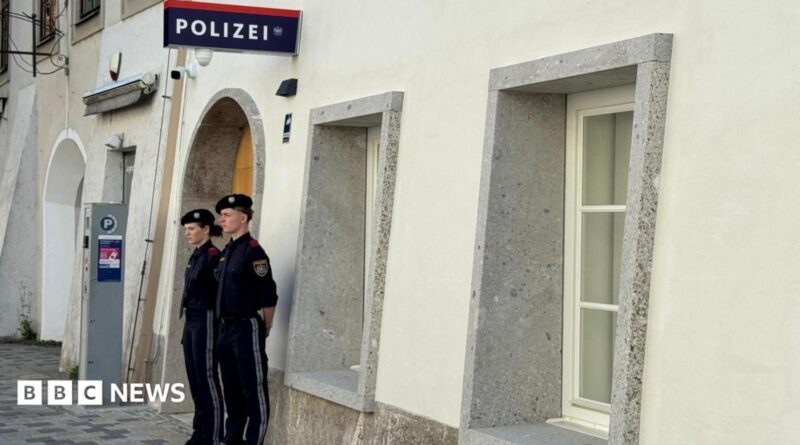
Austrian police station opens at Hitler’s birthplace in bid to rid site of Nazi link
Austria’s Controversial Decision: Transforming Hitler’s Birthplace into a Police Station
Austria’s decision to convert Adolf Hitler’s birthplace into a police station has sparked intense debate and reflection. This move, part of a broader effort to confront and manage the legacy of its Nazi past, has been met with both support and criticism.
The Historical Dilemma
A Building with a Dark Past
The birthplace of Adolf Hitler, located in Braunau am Inn, Austria, has long been a site of contention. Proposals to demolish the building or transform it into a space for education on Austria’s Nazi history have been fiercely debated. Some saw demolition as an erasure of history, while others viewed it as a necessary step to prevent neo-Nazi pilgrimages.
The Government’s Decision
In 2019, the Austrian government announced plans to repurpose the building as a police station. This decision followed an EU-wide architectural competition and significant investment in refurbishment. The building, now markedly different from its original appearance, stands as a symbol of Austria’s attempt to reclaim and redefine the narrative surrounding this historical site.
Public Reaction and Criticism
Mixed Responses
The choice to establish a police station has not been universally welcomed. Critics argue that it sends an ambiguous message, potentially overshadowing the need for a space dedicated to confronting Austria’s Nazi past. Some advocated for a center of responsibility or the return of the Lebenshilfe charity, which declined involvement to avoid political entanglement.
Historical Significance
Despite the changes, the site’s history remains inescapable. A stone outside the building, originating from the Mauthausen concentration camp, serves as a poignant reminder of the atrocities committed during the Nazi era. The stone’s inscription, “Never again Fascism; In memory of millions of dead,” underscores the importance of remembrance and reflection.
The Broader Impact
Navigating Historical Legacy
Austria’s approach to Hitler’s birthplace highlights the broader challenge of addressing uncomfortable historical legacies. By transforming the site into a police station, the government aims to prevent it from becoming a shrine for neo-Nazis while still acknowledging its past. This approach reflects a delicate balance between remembrance and proactive management of historical sites.
Key Takeaways
- Historical Awareness: The decision underscores the importance of confronting historical realities, rather than erasing them.
- Symbolic Transformation: Repurposing the building as a police station is a symbolic act of reclaiming the narrative and preventing misuse of the site.
- Navigating Controversy: The varied reactions reflect the complexities involved in dealing with sites of historical trauma.
Industry Impact
This case serves as a crucial example for countries grappling with difficult historical legacies. It highlights the need for thoughtful, inclusive dialogue and creative solutions that respect history while promoting positive future narratives.


