
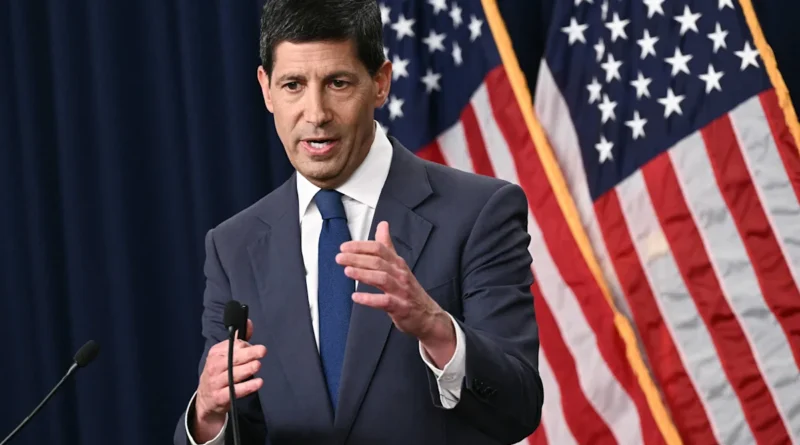
Fed interest-rate decision rocks Wall Street’s inflation fears
Federal Reserve’s Uncertain Path: Navigating Inflation and Market Reactions
The Federal Reserve’s recent decision to hold interest rates steady has left markets on edge, revealing deep concerns about inflation and the economic outlook. Despite no rate hikes, the lack of clear guidance from Fed officials has stirred uncertainty, impacting Wall Street’s confidence and future rate expectations.
Unpacking the Fed’s Decision
No Rate Hike, But Plenty of Uncertainty
The July meeting of the Federal Open Market Committee (FOMC) concluded without an interest rate hike, a move that was widely anticipated. However, the absence of forward guidance has left investors and markets puzzled. Kevin Warsh, a key figure at the Fed, reiterated the commitment to lowering inflation to the 2% target but offered no concrete plan to achieve this.
- Market Reaction: The Dow Jones dropped over 1,100 points, reflecting Wall Street’s unease.
- Treasury Yields: The 30-year Treasury yield rose to 5.2%, signaling concerns about future rate hikes.
Warsh’s Approach: Flexibility Over Clarity
Warsh’s strategy appears to prioritize flexibility, encouraging open debate rather than providing definitive future guidance. This shift has led to increased market volatility as investors speculate on the Fed’s next moves.
- Strategic Ambiguity: By avoiding explicit guidance, Warsh aims to keep policy debates transparent.
- Market Implications: Expect more fluctuations as investors react to each Fed decision without prior indications.
External Factors Influencing the Fed
Geopolitical and Economic Pressures
External factors, such as geopolitical tensions and rising oil prices, are complicating the Fed’s task. These elements contribute to inflationary pressures, making the Fed’s goal of reducing inflation more challenging.
- Middle East Tensions: Escalations in the region are driving oil prices up, which in turn affects inflation.
- Energy’s Role: The energy sector remains a critical driver of inflationary trends.
The Balancing Act: Employment vs. Inflation
The Fed is walking a tightrope between maintaining full employment and controlling inflation. Lower interest rates can boost employment but risk fueling further inflation, while higher rates could stabilize prices but dampen job growth.
- Employment: Lower rates encourage hiring but risk inflation.
- Inflation Control: Higher rates may cool prices but threaten job stability.
Market Expectations and Future Outlook
September as the Pivotal Moment
Market participants are now eyeing the September FOMC meeting as a potential turning point. The anticipation of a rate hike is growing, with traders pricing in a significant chance of an increase.
- Rate Hike Odds: There’s a 67.9% probability of a 25 basis-point hike in September.
- Year-End Forecast: Expectations lean towards further tightening by December.
Industry Impact: What to Watch
The Fed’s decisions have far-reaching implications for various sectors, particularly in lending and borrowing. As interest rates influence everything from mortgage rates to credit card interest, consumers and businesses must stay vigilant.
- Consumer Impact: Rising rates could lead to higher borrowing costs.
- Business Considerations: Companies might face increased financing expenses, affecting investment and expansion plans.
Key Takeaway
The Federal Reserve’s current stance highlights a period of uncertainty and heightened market sensitivity. Investors, businesses, and policymakers must prepare for potential rate hikes and the economic ripple effects they may cause. Monitoring geopolitical developments and economic indicators will be crucial in navigating this complex landscape.


