
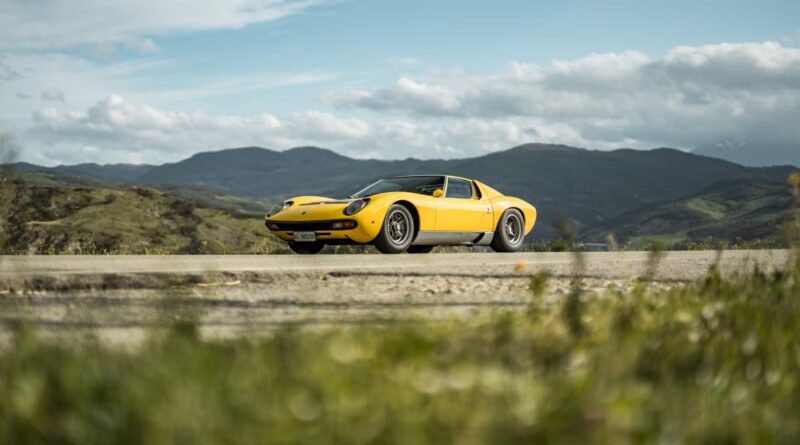
The Miura SV arrived in 1971 for $13,800—and taught Lamborghini how to build its best cars
Lamborghini’s Miura SV: The Supercar That Cemented a Legacy
Lamborghini’s journey through the early 1970s revolved around refining a legend. The Miura, already an icon, required enhancements to address its few imperfections. This need for improvement led to the creation of the Miura SV, a model that not only resolved technical issues but also established a naming tradition that continues to this day.
A Legacy in the Making
The Birth of the Supercar Phenomenon
The Miura debuted in 1966 as a groundbreaking innovation, featuring a V12 engine mounted transversely ahead of the rear axle. This configuration made it the prototype of the modern supercar. Yet, despite its revolutionary design, the Miura faced challenges such as lift at high speeds and a shared oil circuit for the engine and transmission.
Engineering the Super Veloce
Enter the Miura SV (Super Veloce), launched in 1971. This model introduced significant improvements:
- Separate Lubrication Circuits: Addressed the oil circuit issue for better reliability.
- Wider Rear Track and Retuned Suspension: Enhanced stability and handling.
- Ventilated Disc Brakes and Optional Limited-Slip Differential: Improved stopping power and traction.
- Design Tweaks: A cleaner front end and wider rear fenders for larger tires, ditching the iconic “eyelash” trim for a more purposeful look.
These changes elevated the Miura SV to an “ultimate expression” of performance, as described by Stephan Winkelmann, CEO of Automobili Lamborghini.
Craftsmanship and Personalization
Beyond Performance
Lamborghini’s commitment to rarity, personalization, and craftsmanship is exemplified by its Ad Personam division. This customization studio allows owners to tailor their vehicles beyond standard factory options, similar to the bespoke services offered by other luxury carmakers.
- Unique Personalization: Examples include the Temerario Ad Personam, showcasing innovative materials like woven wool interiors.
- Continued Tradition: The ethos of pushing boundaries in design and performance mirrors the philosophy behind the Miura SV.
The SV Badge: A Symbol of Uncompromised Excellence
Evolution of the SV Nameplate
After a 20-year hiatus, the SV badge reemerged with the Diablo SV in 1996, followed by the Aventador SV in 2015. Each iteration retained the essence of uncompromising performance and engineering excellence introduced by the Miura SV.
- Diablo SV: Boosted sales with its powerful 510 to 530 horsepower output.
- Aventador SV: Featured 740 horsepower and a lighter build for enhanced agility.
Industry Impact
Key Takeaway
The Miura SV’s legacy is a testament to Lamborghini’s relentless pursuit of perfection and innovation. The SV badge has become synonymous with peak performance, influencing the brand’s direction and setting benchmarks in the supercar industry. For enthusiasts and collectors, it represents the ultimate expression of Lamborghini’s engineering prowess and design philosophy.
The Miura SV’s impact is felt not just in its historical significance but in its continued inspiration for future models, ensuring that Lamborghini remains at the forefront of automotive excellence.


